
Provided to NEED by the Northeast Communicators Network – Author “Combined Reports”
Across the Northeast, land‑grant universities are pairing forest science with on‑farm education to keep maple a resilient, growing sector, despite climate variability, shifting markets, and evolving technology.
A vivid example comes from Cornell University’s work to “go beyond maple” by designing diversified, climate‑smart sugarbush agroforestry systems. In a multi‑year field trial at Arnot Forest, Cornell researchers grew 18 fruit‑ and nut‑bearing understory species within an actively managed sugarbush, then coupled those plant trials with product development, piloting items like maple–hazelnut spread and maple–elderberry wine to open new revenue streams for producers. Early standouts under low‑input management included hazelnut, Cornelian cherry, aronia, and pawpaw, species that can add value while maintaining a healthy, productive canopy for sap.
That same Cornell team is translating the research for producers through the Cornell Maple Program, publishing how‑to bulletins on sap chilling methods to protect quality and extend processing windows, and product guidance for otherwise hard‑to‑market “buddy” syrup, turning a potential loss into value‑added opportunities. The program also runs courses such as Sugaring for Profit and maintains a large technical library that spans sugarbush management, forest health, tubing/vacuum systems, sensory quality, and business planning.
At the University of Vermont, researchers are tackling a different, but equally pivotal, challenge: how to measure and improve sustainability across the maple sector. UVM’s Maple Sustainability Indicators project is building a ten-year, long‑term monitoring framework that captures environmental, economic, and community metrics, from energy use and reverse osmosis adoption to material inputs like plastic tubing, giving producers and policymakers a shared dashboard for progress and risk. UVM Extension’s maple specialists are embedding those insights into producer education, quality testing, certification, and maple business advising so that data‑driven practices become day‑to‑day management.
Farther Down East, the University of Maine is aligning research and Extension to help sugarmakers outpace environmental stressors. UMaine scientists and Extension educators are partnering with the state climatologist to translate seasonal outlooks into practical decisions from tapping windows to sanitation and sap handling, and to study how repeated drought, extreme rainfall, and wind events affect long‑term sugarbush vigor and syrup yields. Their outreach emphasizes adaptive practices such as vacuum systems, sap chilling, and sanitation, to sustain quality through warmer spells and erratic freeze–thaw cycles.
These research advances land with urgency because winters across much of the Northeast are warming, the very signal that drives sap flow. Penn State Extension educators have documented how earlier thaws and shorter freeze–thaw periods push producers to tap sooner, manage tap‑hole sanitation more aggressively to slow microbial closure, and improve sap storage to prevent spoilage during warm snaps. Their public education and resources help both hobbyists and commercial operators navigate the changing season while maintaining quality and food safety.
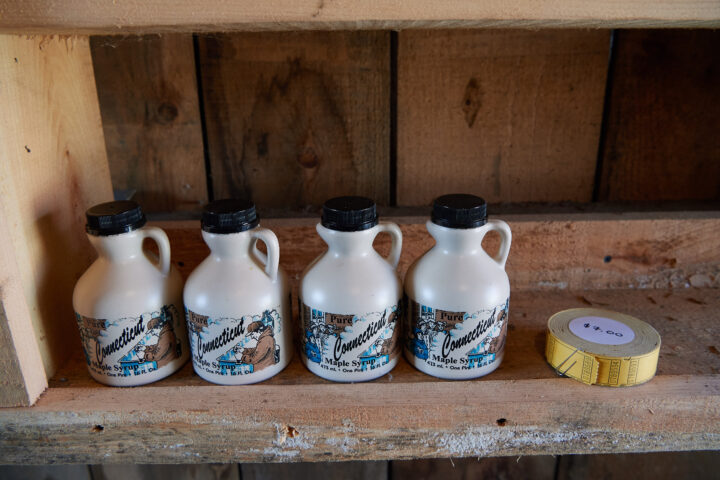
Beyond production science, Northeast land‑grant institutions are strengthening the maple value chain through market development and safety initiatives. UConn Extension forestry educators, faculty in the Department of Natural Resources and the Environment, and students collaborate to operate a student-run maple syrup program within the 2,100-acre UConn Forest. Students participate in all phases of maple syrup production, including tapping sugar maple trees, collecting sap, boiling and filtering syrup, and maintaining equipment at the campus sugar house. The program integrates classroom learning, work experiences, and internships, allowing students to apply forest management principles while producing a high-quality, locally made product. Sugar bushes are rotated and rested as part of long-term forest stewardship, reinforcing sustainable management practices.
What this integration of research and Extension means for producers and communities
- Climate‑smart sugarbushes. Cornell’s diversified understory trials show that a sugarbush can be both a sap forest and a specialty‑crop system, spreading risk, adding marketable products, and improving business resilience while maintaining canopy health. Extension bulletins and field days convert those findings into planting lists, pest cautions, and product recipes that producers can test locally.
- Evidence‑based practices. UVM’s indicator framework brings clarity to long‑debated questions such as energy use, materials, and community benefits so producers can demonstrate sustainability claims and target investments where they matter most. As those metrics are embedded in Extension programs, they become operational tools, not just reports.
- Adaptive operations. UMaine and Penn State guidance on sanitation, vacuum, sap chilling, and storage directly addresses the realities of shorter, earlier, and more variable seasons, helping producers maintain yield and flavor even as freeze–thaw patterns shift.
- Consumer connections. Each of the programs connects maple syrup production to consumers in their respective state, while building food and environmental security. The consumer connection to the food system further strengthens their knowledge and awareness of agricultural production in the Northeast.
Why the land‑grant model works for maple
Maple is uniquely place‑based: it depends on forest health, microclimate, and community woodlots. Land‑grant universities can serve that complexity by generating locally relevant research including which understory crops actually thrive under a Northeast sugarbush canopy and then pushing those answers quickly into practice through county offices, producer networks, and hands‑on trainings. That loop of discover, demonstrate, and deliver is visible in Cornell’s agroforestry and product development pipeline, UVM’s sustainability metrics moving into producer coaching, UMaine’s climate research informing adaptive practices, and Penn State’s season‑by‑season guidance to thousands of sugarmakers.
As producers adopt more vacuum, sanitation, and sap‑cooling technologies, and as sugarbush plantings mature, the Northeast’s maple sector can buffer weather volatility while expanding its product mix to syrups, confections, beverages, and culinary pairings that reflect the forest’s full potential. Land‑grant institutions are positioned to help producers make data‑driven choices that keep forests healthy, businesses profitable, and communities connected to a signature regional food.