
June 4, 2026
Article provided by the Northeast Communicators Network
As communities across the Northeast celebrate June Dairy Month, researchers and Extension professionals are working alongside farmers to help sustain one of the region’s most important local food industries.
Dairy remains uniquely tied to local communities. Because milk and many dairy products require refrigeration and have relatively short shelf lives, production and processing systems often stay close to consumers. That means supporting dairy farmers has impacts that extend well beyond the farm gate, strengthening local economies, maintaining food access, and reinforcing regional food system resilience.
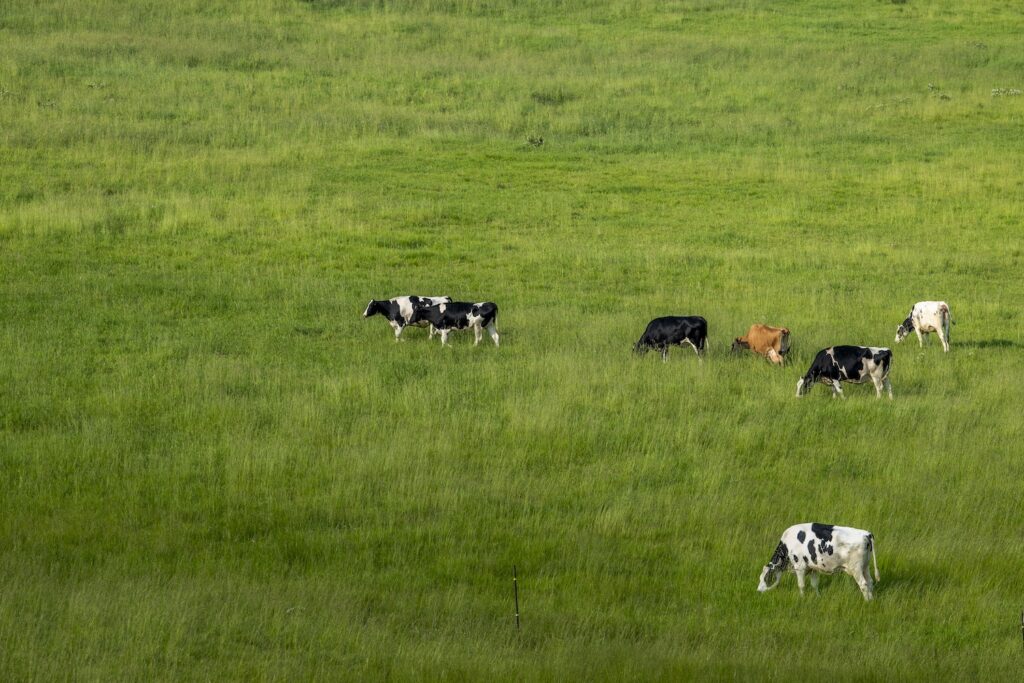
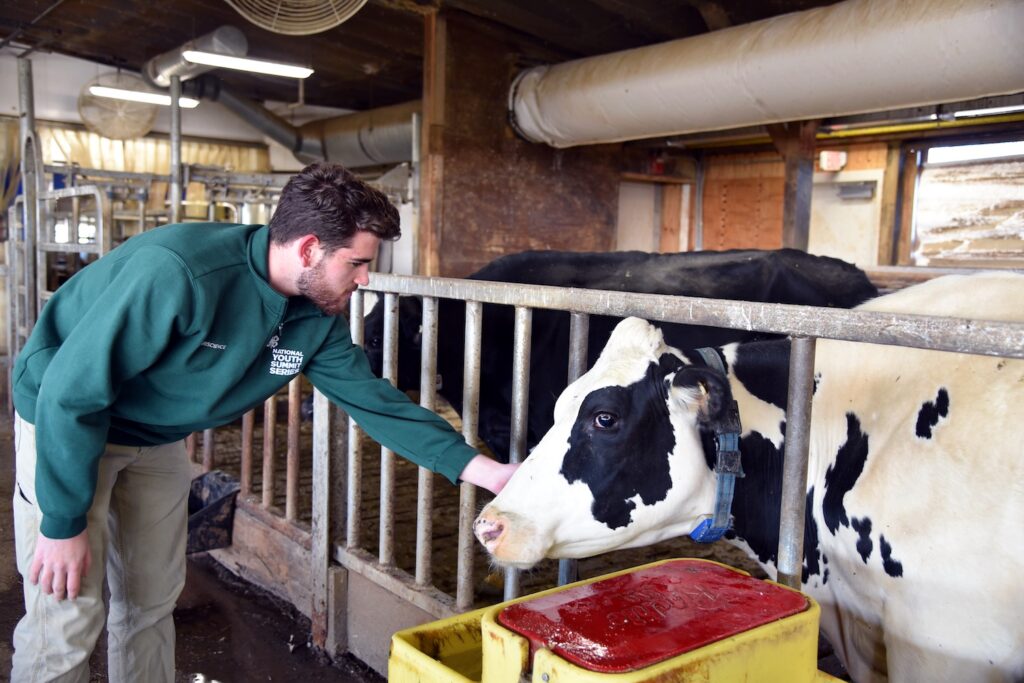
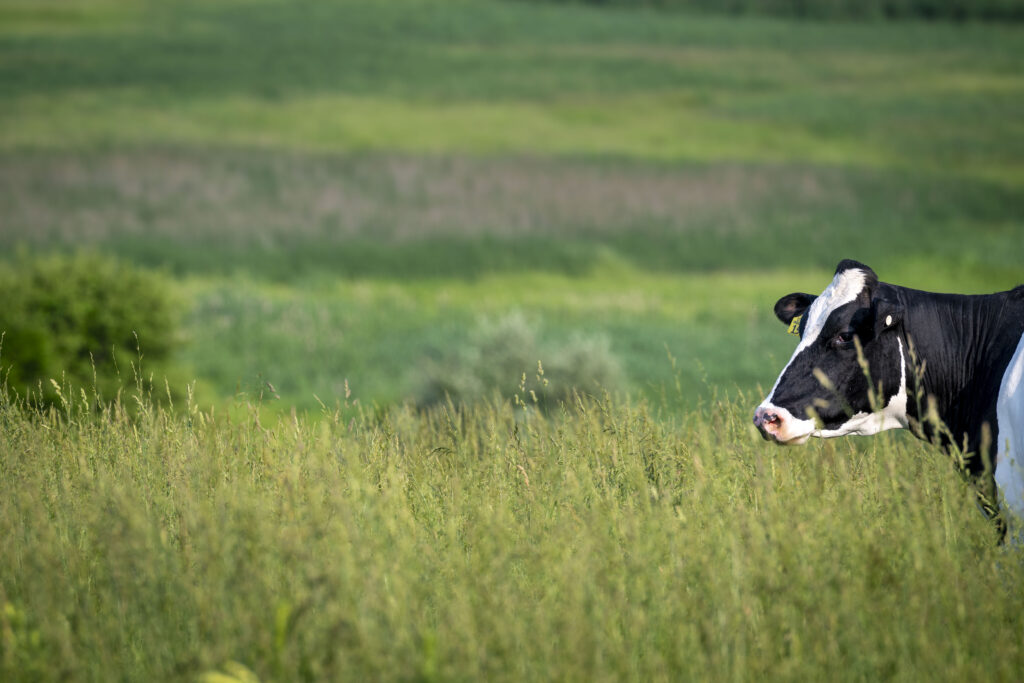
Images provided by the University of Connecticut; May 2026
Across the Northeast, land-grant universities are developing new technologies and research-based solutions to help dairy producers address ongoing challenges, including labor shortages, rising production costs, animal health concerns, and increasing food safety demands.
At the University of Maine, Extension specialists are helping dairy farmers adopt wearable technologies that improve herd management and labor efficiency. Through a project involving five dairy farms, producers used cow-monitoring systems to detect estrus and monitor animal health events while participating in cohort meetings, individual consultations, and webinars.
The project helped farmers better understand how precision technologies could fit into their operations. Evaluation surveys showed all participating farms improved their understanding of whether to invest in precision dairy technology, while many planned operational changes such as expanding wearable technology use or adjusting breeding strategies to improve pregnancy rates.
Equally important, farmers emphasized the value of learning from one another. Producers shared experiences, troubleshooting strategies, and management ideas through peer-based discussions.
The work reflects a growing effort across the Northeast to make precision agriculture tools more accessible and practical for farms of different sizes and management styles.
At the University of New Hampshire, researchers are studying internal sensor technology designed specifically for small-scale dairy farms common throughout New England. Many of these family-owned operations face shrinking labor pools, limited veterinary access, and increasing operational costs.
The sensors, placed in a cow’s reticulum, continuously monitor indicators such as body temperature, hydration, feed intake, and activity levels. Researchers are evaluating the technology across 400 cows in both tie-stall and pasture-based systems.
Preliminary findings show the sensors can provide real-time data every 10 minutes, helping farmers identify heat cycles, monitor nutrition, and detect health concerns earlier. Researchers say the technology could reduce labor demands while improving herd management and animal welfare.
The project also provides hands-on training opportunities for students learning to apply precision agriculture tools in modern dairy systems.
While some researchers focus on management technologies, others are working to improve disease detection and animal health diagnostics.
At Cornell University in New York, researchers are developing a comprehensive diagnostic platform to better measure inflammation in dairy cattle. Acute and chronic inflammation can reduce milk production, impair fertility and increase disease risk, creating significant economic and animal welfare challenges for dairy farms.
The research focuses on measuring cytokines and acute phase proteins, biological markers that help scientists better understand immune response and inflammation in cows. Researchers have already made substantial progress in developing assays for several important proteins associated with inflammation and infection.
The team’s multiplex cytokine assay is now nearing availability as a public diagnostic tool, offering veterinarians and producers a more advanced approach to monitoring herd health.
Researchers say improved diagnostics could help producers identify health concerns earlier and make more informed management decisions, ultimately supporting healthier animals and more efficient dairy operations.
Consumer confidence and food safety are also central to sustaining the region’s dairy industry.
Researchers from Penn State, Cornell University and IBM Research recently collaborated on a project using artificial intelligence and microbial sequencing to identify anomalies in milk samples, including milk containing antibiotics or milk originating from outside sources.
The team analyzed 58 bulk tank milk samples using AI algorithms capable of identifying subtle microbial differences that traditional methods often miss. Researchers found the AI-based approach successfully detected experimentally introduced antibiotic-treated milk and other anomalies.
Scientists say the research demonstrates how AI can help untangle the complex microbial interactions within food systems, potentially improving food safety monitoring and strengthening supply chain integrity.
Although the research focused on dairy production, the findings could eventually benefit the broader food industry as researchers continue exploring AI applications for food quality and fraud prevention.
Together, these projects illustrate how Northeast universities are combining research, innovation and Extension partnerships to support dairy producers and the communities they serve.
From wearable technologies and animal health diagnostics to AI-powered food safety tools, these efforts are helping farms remain productive, sustainable, and resilient while strengthening consumer confidence in locally produced dairy products.
As the Northeast continues to navigate changing economic, environmental and workforce conditions, dairy research and extension efforts remain critical to supporting regional food systems and the communities connected to them every day.